
Sunscreen as the best anti-aging treatment: Modern UVA/UVB filter technology and debunking outdated myths
Skincare with high concentrations of active ingredients promises fast results against fine lines and dark spots. From a scientific perspective, however, there is a fundamental foundation that determines any success: daily, consistent sun protection.
Skincare with high concentrations of active ingredients promises fast results against fine lines and dark spots. From a scientific perspective, however, there is a fundamental basis that determines all success: daily, consistent sun protection.
No retinoid, no peptide, and no antioxidant can achieve its full effect if the skin is exposed to unprotected ultraviolet radiation day after day. For while natural, genetically determined skin aging is a slow biological process, the sun drastically accelerates this process—a phenomenon known in dermatology as photoaging.
UVA and UVB Rays: The Invisible Antagonists
The light spectrum of the sun reaches the earth in different wavelengths, two of which are particularly important for skin health:
- UVB rays (shorter wavelengths): They primarily affect the epidermis (the upper layer of skin) and are mainly responsible for classic sunburn as well as acute DNA damage in skin cells.
- UVA rays (longer wavelengths): They make up the majority of UV radiation, penetrate clouds and glass, and penetrate deep into the underlying skin layers. There, they destroy the collagen and elastin fibers that ensure the firmness and elasticity of the skin.
The latest dermatological research also shows that both UVA and UVB rays can significantly contribute to the development of skin cancer. Comprehensive protection is therefore no longer merely a cosmetic issue, but a medical necessity.

The Development of Dark Spots and Premature Skin Aging
When UVA radiation penetrates deep into the skin, it stimulates the melanocytes (the pigment-producing cells). If production becomes uneven, hyperpigmented areas of skin develop in the form of stubborn dark spots or age spots, which are often harder to correct than fine lines.
At the same time, UV rays activate enzymes (so-called matrix metalloproteinases or MMPs) that break down the skin's own collagen. The skin loses density, becomes thinner, and dryness lines permanently etch themselves in.
The Myth of a Tan as a Warning Signal
Regarding the topic of sun protection, one myth in particular persists stubbornly: the idea that a summer tan represents a 'healthy glow'. But tanned skin is in reality nothing more than an acute emergency response of the skin.
It signals that the UV radiation has already stressed and damaged the skin cells, and the skin forms pigments as an emergency measure to defend itself against further damage.
Pre-tanned skin therefore needs exactly the same uncompromising protection as pale skin.
Modern Filter Technology: Protection Without Compromise
Modern sun protection must do far more than just prevent sunburn. It requires modern, highly effective UVA/UVB filter technology that integrates seamlessly into daily skincare without weighing down or irritating the skin.
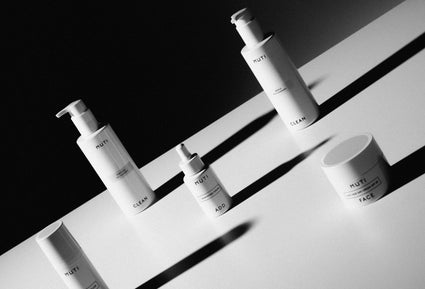
MUTI offers specially developed, water-resistant sun protection products in its SUN FACE Series that meet these requirements. Water resistance does not mean that protection lasts indefinitely after swimming or sweating; rather, it guarantees that the protective performance is maintained under standardized conditions for a defined period in a moist environment. High-quality formulations rely on photostable, modern filter systems that reliably block a wide spectrum of UV radiation.

Sunscreen as a Daily Essential
Sunscreen is not a seasonal product for summer vacation, but the fundamental final essential of every morning routine. Through the combination of modern, skin-protecting filters and moisturizing, barrier-strengthening components—as combined in MUTI's FACE SPF Formulations—the skin is optimally protected.
Thus, the tissue is preserved from the invisible damage of light, and the skin retains its youthfulness, clarity, and natural elasticity in the long term.
Scientific References
Guan, L. L., et al. (2021), Sunscreens and photoaging: a review of current literature, American Journal of Clinical Dermatology, 22(6), 819–828
Baker, P., et al. (2023), Skin Barrier Function: The Interplay of Physical, Chemical, and Immunologic Properties, Cells, 12(23), 2745
Review on Ultraviolet Radiation and Matrix Metalloproteinases in Skin Photoaging (2024), Dermatology and Therapy, 14(2), 311–328