
Active ingredient concentrations – purpose and limitations
Why isolated percentages do not tell the whole story about actual product performance
Modern cosmetic packaging has adopted a clear numerical language: 10% niacinamide, 15% vitamin C, 2% hyaluronic acid… What serves the purpose of precise dosing in pharmacy has become a kind of seal of quality in the beauty sector in recent years. This gives consumers the impression that the higher the number before the percentage sign, the more potent the cell renewal.
In enlightened skincare, transparency about active ingredient concentrations is a valuable step. A reliable percentage indicates that an ingredient is present at a concentration that has shown proven physiological benefits in scientific studies—and was not merely added as a trace element for the label, which unfortunately still occurs in the market.
But anyone who reduces skin biology to linear percentage marketing falls short. A high number on the bottle is no guarantee of high activity in the tissue. It is an important guide—but whether a molecule actually reaches its cellular target structure depends on the interplay of galenics, molecular bioavailability, and the architecture of our skin barrier.
The biophysical barrier: Why the skin is not a passive membrane
To understand the limitations of isolated concentration figures, it is worth looking at the primary function of the epidermis, the outermost layer of the skin: It is not a sponge that uncritically absorbs topically applied substances, but a highly efficient biological shield. The stratum corneum—the outermost horny layer—functions according to the brick-and-mortar model: tightly packed horny cells (corneocytes) are embedded in an orderly, lamellar lipid matrix of ceramides, cholesterol, and free fatty acids.
This structure prevents the uncontrolled influx of foreign substances as well as the loss of vital water. The absorption of substances is limited by fundamental physicochemical factors:
- Molecular size: Substances with a high molecular weight encounter a physical barrier at the horny layer. For example, unfragmented hyaluronic acid remains on the skin surface and forms a moisture-binding film there, while fragmented pieces can exert targeted signaling effects in the upper epidermal layers.
- Lipophilicity and partition coefficient: An active ingredient must be able to pass through fat-soluble phases to penetrate the lipid lamellae, as well as possess water-soluble properties to become effective in the living layers of the epidermis.
A mere increase in concentration on the surface does not bypass these barrier principles. If an active ingredient is not present in a bioavailable form, the declared amount remains largely non-functional on the horny layer.

The vehicle makes the difference: Galenics beat isolated percentage values
In scientific formulation, the vehicle refers to the entire carrier system in which an active ingredient is dissolved and transported. How much of a declared active ingredient reaches the biological target structure depends primarily on this carrier formulation.
- The chemical state and pH value: Numerous active ingredients change their molecular charge depending on the pH value of the final product. If a molecule is ionized, it loses its ability to diffuse through the lipophilic double membranes of the stratum corneum. An active ingredient dosed moderately within the ideal pH window penetrates many times more efficiently than a highly concentrated solution in an unphysiological environment.
- Encapsulation systems instead of uncontrolled peaks: Sensitive molecules such as retinol oxidize quickly under the influence of oxygen and light. Unencapsulated, high-percentage retinol leads to massive concentration peaks on the surface, which trigger acute irritation, while the molecule becomes unstable in deeper layers. Embedded in liposomal or polymeric carrier systems, the active ingredient remains protected from premature degradation and is made uniformly bioavailable.
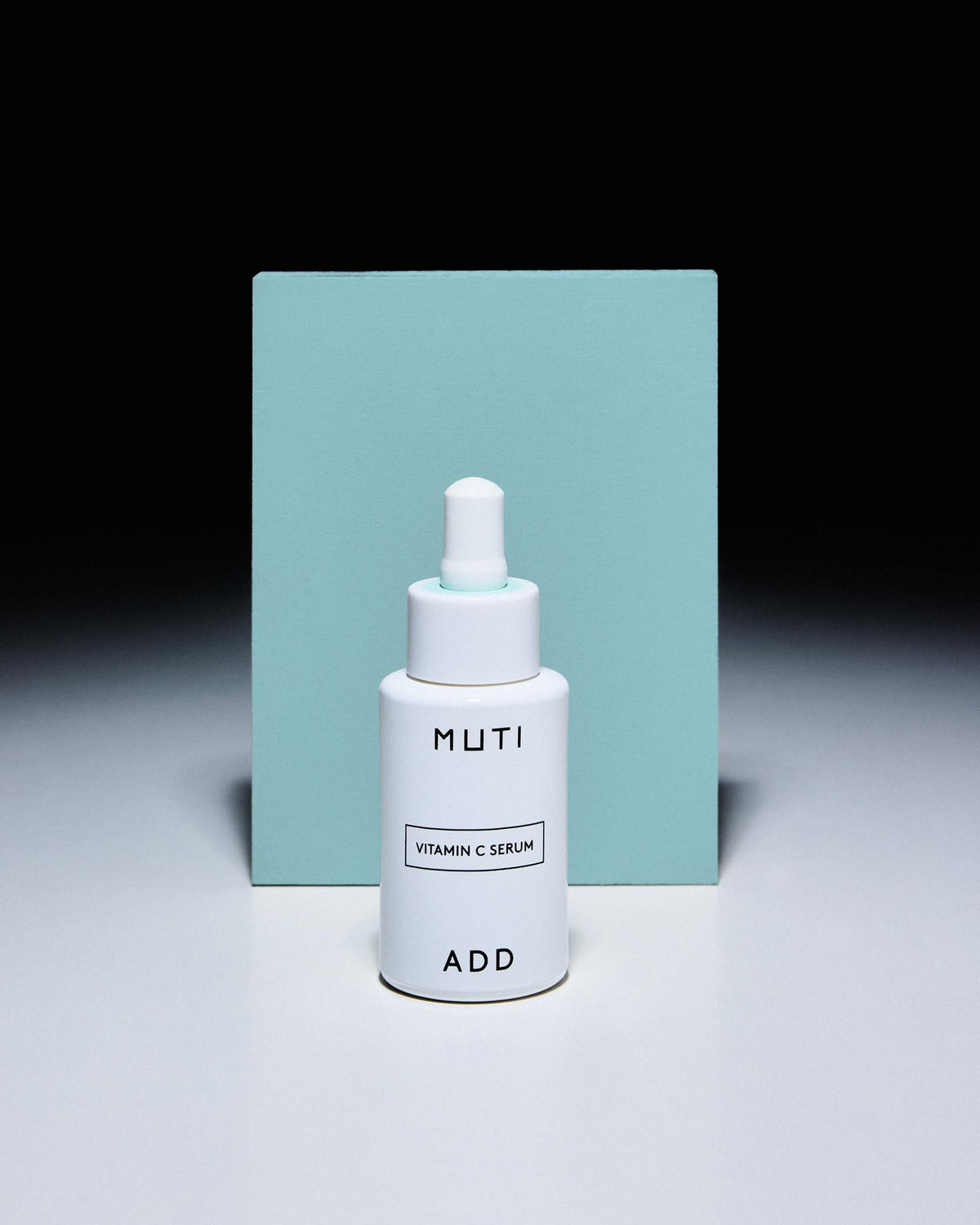
- Packaging and protection from oxidation: Oxidation-prone active ingredients such as pure vitamin C degrade quickly without adequate light and air protection. A serum with a high percentage that is repeatedly exposed to oxygen in a transparent dropper bottle quickly loses its biological efficiency. Dark dosing dispensers protect the molecular integrity of the formulation.
The cellular plateau: Why receptor saturation sets limits
A widespread misconception in home care is the assumption of an unlimited linear dose-response curve, along the lines of: double the dose equals double the collagen synthesis, etc. However, biochemical processes in human skin cells function in a receptor- and enzyme-mediated manner.
As soon as an active ingredient binds to cellular enzymes or nuclear receptors, the reaction rate is subject to biochemical saturation kinetics. When all available transporters and binding sites are occupied, any additional excess remains ineffective.
Mature skin: Barrier vulnerability and inflammaging
This connection takes on particular importance for mature skin. Over the years, the sebaceous glands reduce their activity, and the cellular synthesis of epidermal lipids slows down. The skin becomes thinner, dries out more easily, and has a significantly reduced buffering capacity.
If a mature skin barrier is permanently exposed to overdosed individual substances, the balance is upset:
- Destabilization of the lipid matrix: Unphysiologically high concentrations disrupt the fine arrangement of intercellular ceramides. Transepidermal water loss increases, leading to feelings of tightness and fine lines.
- The inflammatory cascade: Micro-damage to the barrier activates messengers for inflammation. This chronic, subclinical process (inflammaging) stimulates enzymes that actively break down the supporting collagen and elastin framework of the dermis.
What was intended as intensive rejuvenation care ultimately accelerates biological tissue aging through uncontrolled overdosing.

The MUTI perspective: Transparency in the optimal effective window
Modern dermatology clearly distinguishes between blind percentage marketing and responsible declaration. Concentration figures are a valuable tool for transparency and guidance. They show you that a product does not work with placebo dosages, but is dosed in the scientifically proven range in which the active ingredient develops its optimal benefits.
However, the effect is not created by an isolated number on the packaging. True formulation expertise means embedding this optimally dosed active ingredient in a physiological overall system: with bioavailable, low-irritation carriers, skin-identical lipids, and moisture-binding osmolytes such as ectoin, tailored to the natural pH of the skin. In short: Those who understand skincare as biochemical architecture do not look for the highest number—but for the most intelligent formulation.
Scientific References
Boo, Y. C. (2021). Mechanistic Basis and Clinical Evidence for the Applications of Nicotinamide (Niacinamide) to Control Skin Aging and Hyperpigmentation. Antioxidants (Basel), 10(8), 1315.
Kohl, E., et al. (2016). Skin aging and retinoids: formulation, stability, and delivery mechanisms via encapsulation. Archives of Dermatological Research, 308(4), 215–225.
Bouwstra, J. A., et al. (2024). The skin barrier: an extraordinary interface with an exceptional lipid organization. Advanced Drug Delivery Reviews, 205, 115160.
Choi, B., et al. (2021). Fundamentals of Enzyme Kinetics: Michaelis-Menten and Non-Michaelis-Type (Atypical) Enzyme Kinetics. Journal of Enzyme Inhibition and Medicinal Chemistry, 36(1), 2212–2225.
Neubig, R. R., et al. (2017). An overview of pharmacodynamic modelling, ligand-binding and receptor function. British Journal of Pharmacology, 174(12), 1734–1747.